
I’m Not Here to Play
In the early 1990s, at the Rochester Institute of Technology, I was working as a teaching assistant for a professor leading a digital photography workshop for industry professionals. A participant was struggling with the early tools — this was the era of Photoshop Version 1, when everything was new and nobody quite knew what any of it could do or where things were heading. I told her to play with the tools, to push things until they broke, and see what happened.
She looked at me and said, “I’m not here to play. I’m here to work.”
I’ve been thinking about that exchange ever since.
First, learn the rules
I am not anti-rule. Rules exist for good reasons. The rule of thirds, leading lines, fill the frame — these are the accumulated wisdom of generations of artists and image makers who helped create the visual grammar we inherit when we pick up a camera. Learning them is how you train your eye. You cannot break the rules well without knowing what you’re breaking.
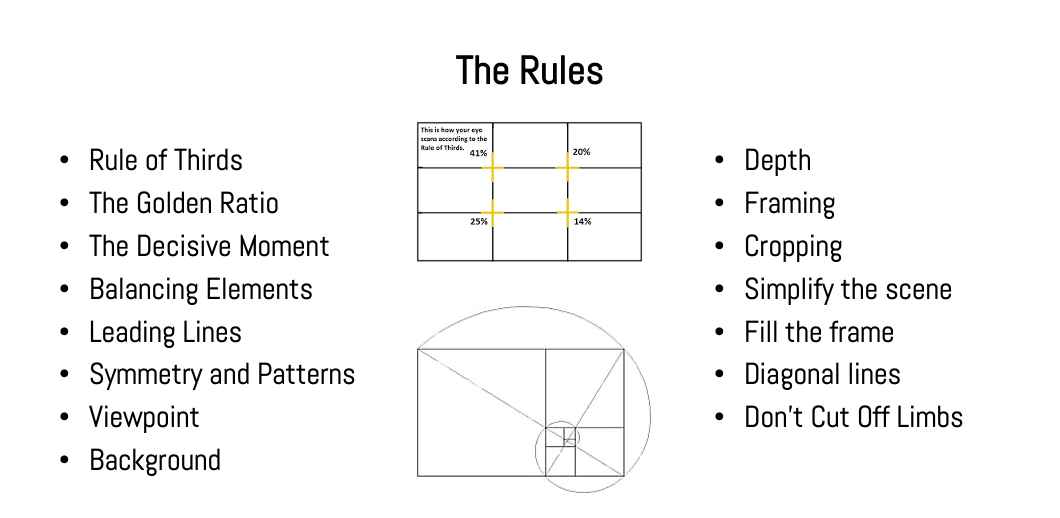
Picasso said it better than I can: “Learn the rules like a pro, so you can break them like an artist.” Einstein called play “the highest form of research.” Abraham Maslow, who spent his career studying what humans need to truly flourish, put it simply: “Almost all creativity involves purposeful play.” These are not people who skipped the fundamentals. These are people who mastered them — and then got curious about what was on the other side.
Then, play
I’ve always been a happy, silly, near-sighted analytic daydreamer who loves looking at details and finding the essence of things. I grew up with photography, studied it in college, but my path to play was reignited in 2008 when I got an iPhone and started making rudimentary caricatures of family and friends. There was no agenda — just the pure pleasure of making something strange and seeing if people laughed. Then came Hipstamatic, which simulated different film stocks and lenses, allowed me to create a “look” and I started chasing something I couldn’t quite name at the time: the reduction of a scene to its visual essence — geometry, color, light, stripped of everything extra. I made thousands of images and kept refining my eye. That’s where my visual language actually comes from. Not from studying. From playing.

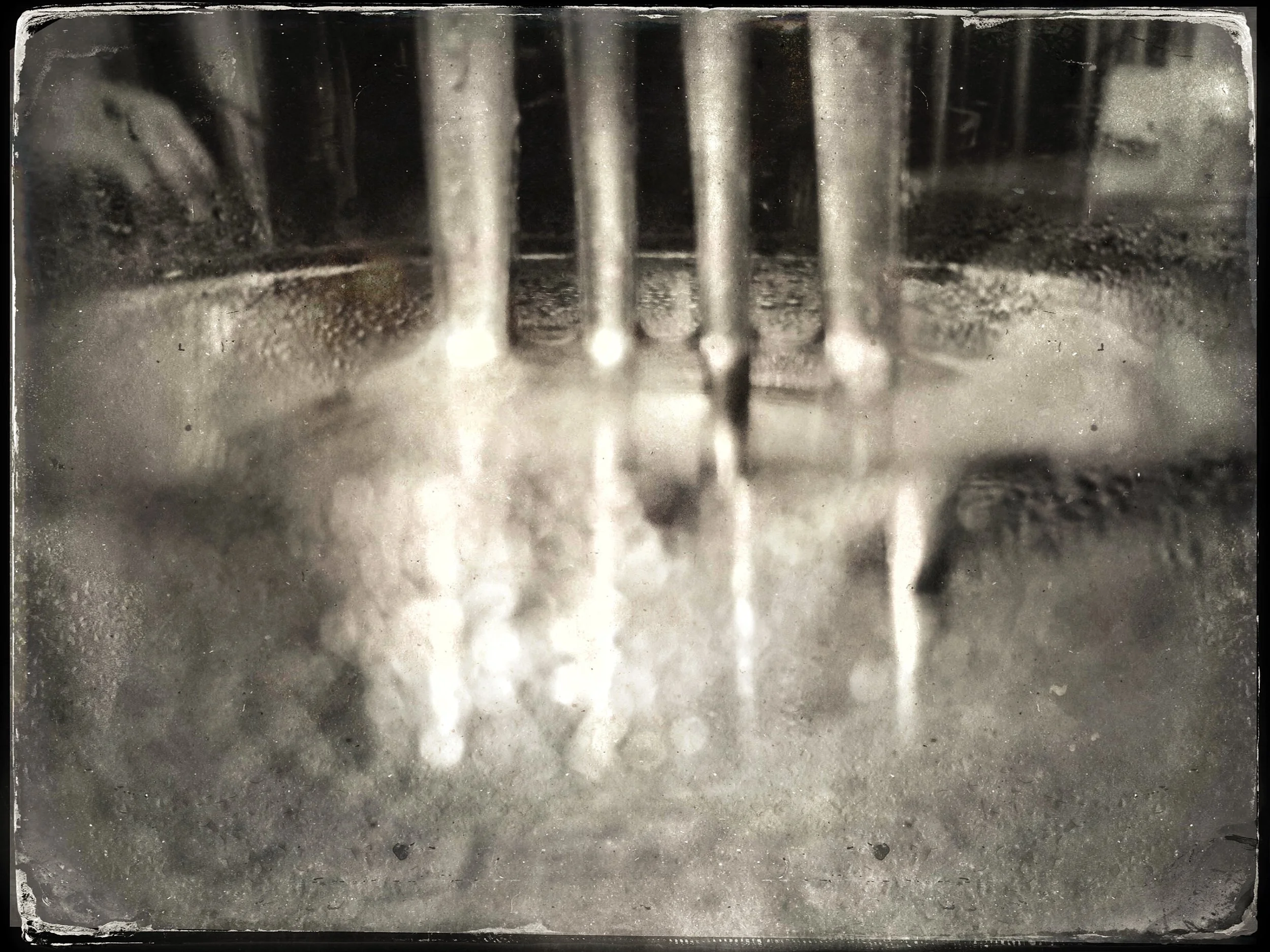
The fork is one of my favorite subjects. I’ve made countless images of forks — from every angle, at every distance, with and without water, with and without focus. Once I put a fork in a glass of water and the distortion became its own subject entirely. Roland Barthes wrote about punctum — the detail that pricks you, that catches you off guard. A fork literally puncturing water does exactly that.
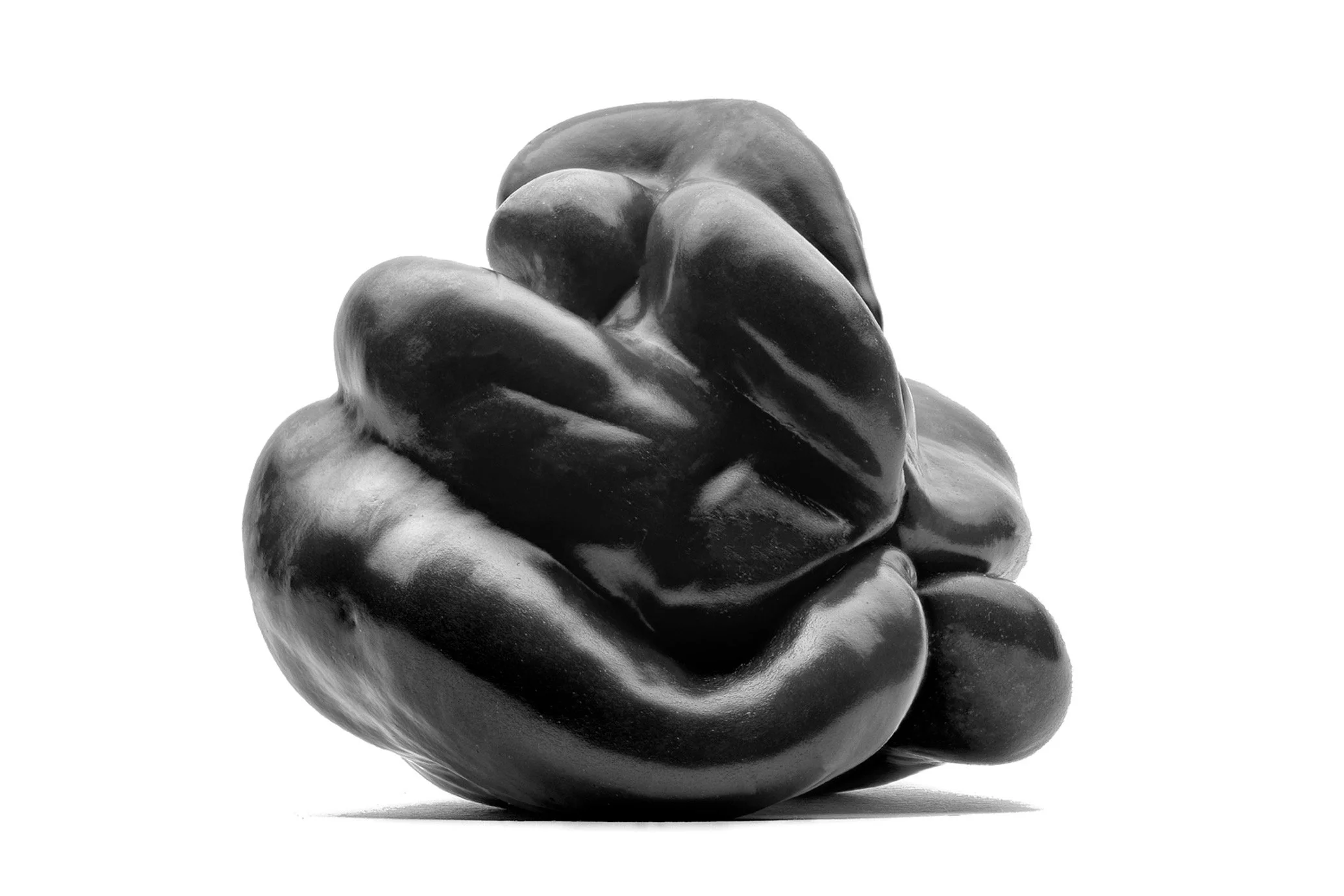
Not every experiment becomes art. I did a series of images of bell peppers and tried too hard at one point — one of them looked like a pile of poop. It’s a useful lesson in not taking yourself too seriously. The point isn’t to succeed — it’s to keep the question alive. What if? Why not? What happens if I get too close? You’ll know when it clicks.
Play is not frivolous
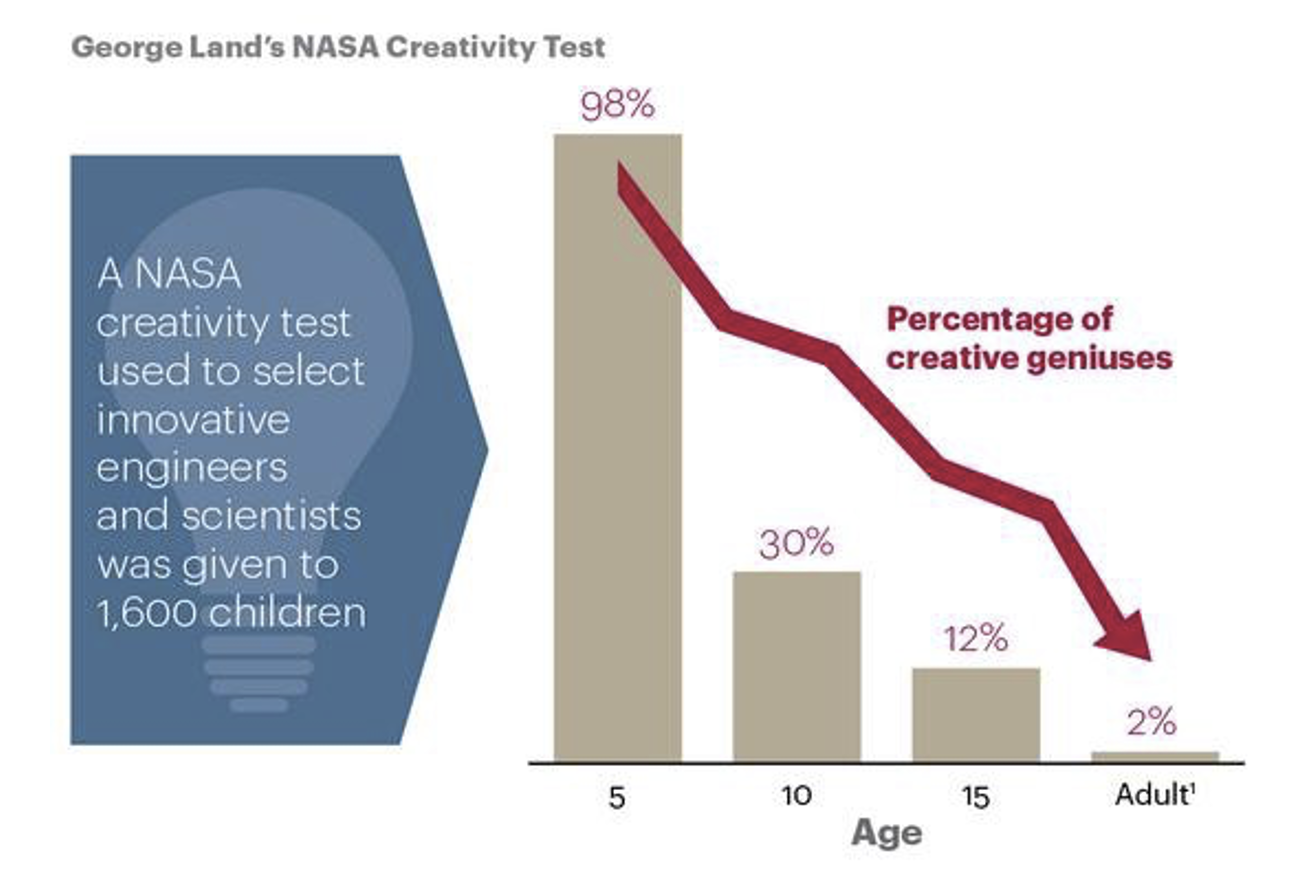
There’s a famous NASA study that tested creativity in children and adults. At five years old, 98% of children scored as creative geniuses. By adulthood, 2%. The numbers have been debated — but the concept holds. UC Berkeley researchers found that when presented with two possible explanations for a scenario, one obvious and one unusual, adults consistently chose the obvious one while children reached for the non-obvious. We aren’t born less curious. We’re trained toward the safe answer and to take fewer chances or risks.
Play is the antidote. Not play as goofing off — but, play as genuine, low-stakes exploration. Making pictures nobody asked for. Photographing a bathroom window every morning for two weeks just to see what the steam does to the light. Taking a train ride with an iPhone and stitching the broken, glitching panoramas together not despite the artifacts but because of them.
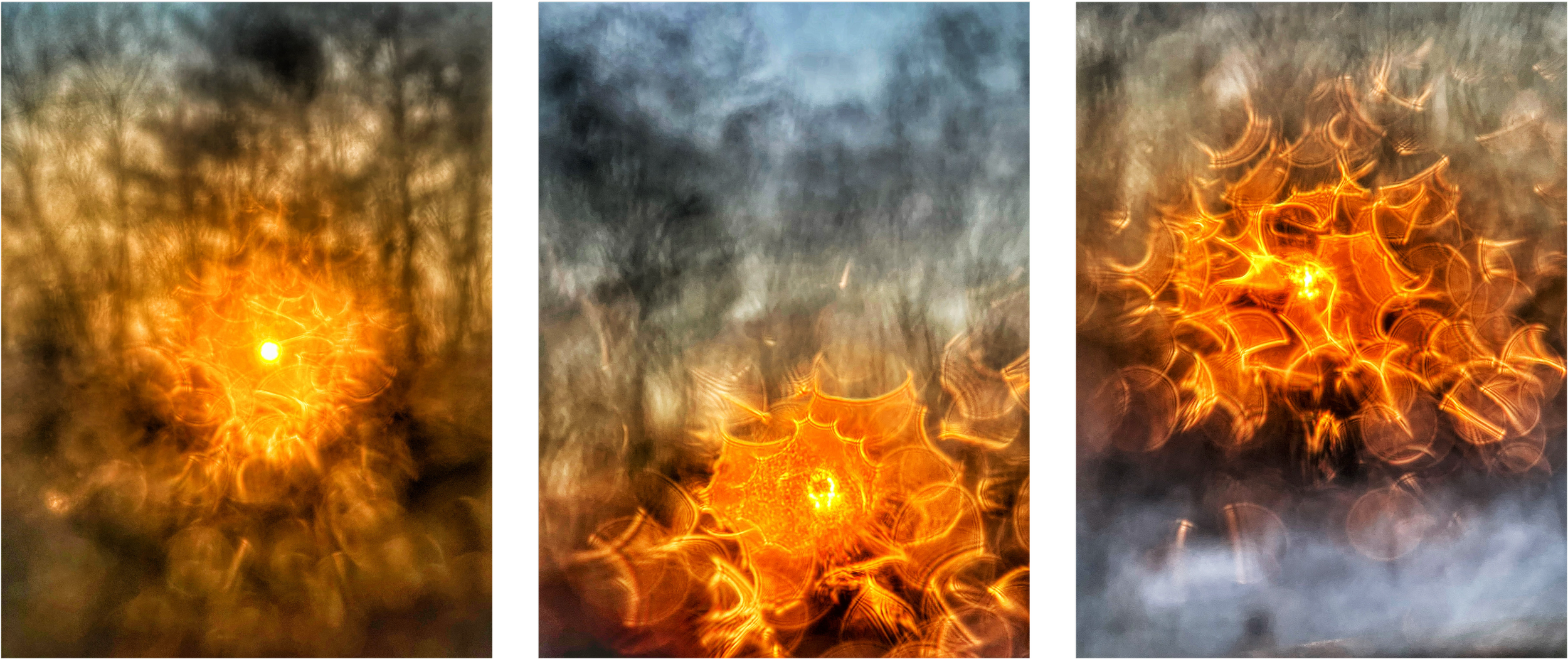
“Remember to play after every storm.” — Mattie J.T. Stepanek
I had the privilege of participating in the development of a nonprofit foundation for Mattie Stepanek, a young man known both for his illness and for his extraordinary wisdom. That quote has stayed with me through my life. Play is not what you do when things are easy. It’s what keeps you alive when they aren’t.
What this looks like in practice
A few years ago, I had the chance to share all of this with a group of children at a summer camp workshop at the Rehoboth Art League. Teaching kids about breaking the rules is, I’ll admit, a bit of an open door. But what I found was something I didn’t expect: the real obstacle wasn’t rule-following. It was the fear of being wrong in front of someone else.
The children loosened up the moment they understood that the picture didn’t have to be good. It just had to be theirs. One attempt led to another. Questions got weirder and more interesting. That’s the mechanism. That’s how play works.
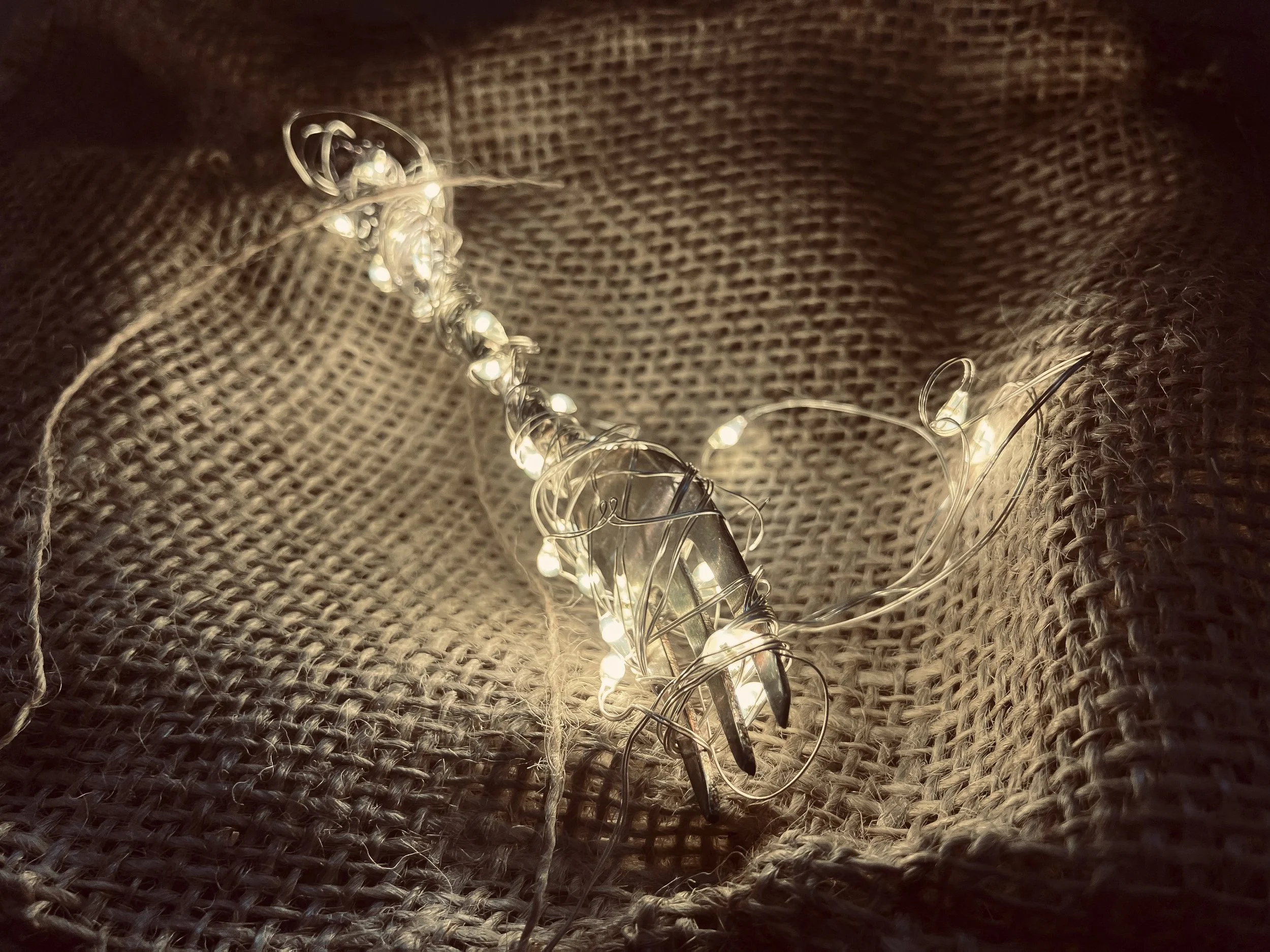
It works the same way in my studio. I keep objects around that I come back to for years — bottles, utensils, glass bowls, leaves. Each time I return, I’m a little different, the question is a little different, the image is a little different. The practice of looking closely, really closely, at something ordinary is endlessly renewable. You never run out of things to see if you’re willing to look again.
Over the years I’ve distilled this into a process I actually use: find a personal connection to the subject; germinate the idea through notes, research, and conversations with people I trust; test and iterate until something clicks; identify the visual essence; collect the artifacts or subjects I need; photograph until I’m satisfied; and process and print with the same attention I brought to making the image. It sounds more linear than it is — in practice it loops back constantly. But having the framework keeps me from just wandering. Stuart Brown, the psychiatrist who has spent decades studying play, argues that play isn’t the opposite of work — it’s the condition that makes deep work possible. That’s been true for me.
A note on permission
Nobody is going to give you permission to play. That’s the whole point. You must decide that the experimentation is worth it and that you don’t care what others think of your exploration. You learn by doing and doing and doing — and occasionally by looking at what you’ve done and recognizing something you didn’t know you were looking for.
So: don’t take yourself too seriously. Learn to play, play to learn. Ask “what if” more than you ask “what’s right.” Find people who make you laugh and make strange things. Make pictures for yourself. Be a honey badger — because honey badgers don’t care. Pick up the camera. Or the phone. Or whatever you have. Photograph the fork on the table. Get too close. Break something.