
The Line Is … Truth
Reflections on art, propaganda, and the erosion of trust
I often think of a painful memory as an opportunity for reflection. With time and distance, I can return to it, look more closely at the details, and find meaning in what happened. This is why I struggle with making art in response to current events. I want time to reflect, not simply react.
And yet, my recent work has been produced in direct response to current events. There is a tension between my desire to step back and evaluate and an impulse to shake the consciousness of man, as if to say, “Wake up!” I think this is a healthy tension. It forces me to slow down, research, think, iterate, and create. Ultimately, I hope the work can endure beyond the events that gave rise to it.
The search for truth
The search for truth is as old as human thought itself. For millennia, philosophers and religious leaders have sought to understand truth and our place in the world. Some have pursued clarity and understanding; others have sought to shape the world to fit their beliefs.
In Plato’s Allegory of the Cave, Socrates describes prisoners who mistake shadows for reality because they have never known anything else. The allegory speaks to our vulnerability to the limits of perception and to how easily our understanding of reality can be shaped by what we are shown and led to believe.
The Enlightenment helped establish the intellectual foundations of our modern understanding of truth: that knowledge should be grounded in reason, evidence, and inquiry, and that accepted beliefs must remain open to question. Yet the struggle between truth and its distortion has never gone away.
Hannah Arendt explored how factual truth can be threatened by political power and deliberate deception. In The Image(1962), Daniel Boorstin examined “pseudo-events”—events manufactured to attract attention and shape public perception. Both remain relevant to a world in which events, images, and information can be constructed to advance a particular narrative. When what we see and hear is deliberately shaped to influence what we believe, how do we distinguish reality from its representation?
Living in a post-truth world
What distinguishes the contemporary post-truth era is not the invention of falsehood, but the growing ability to undermine the authority of facts themselves.
Propaganda uses selective information, emotional appeals, repetition, and distortion to shape what people believe. In today's information environment, these techniques can travel rapidly and widely, blurring the distinction between reporting reality and manufacturing it. Repetition can lend credibility to falsehood, belief can override evidence, and deliberate distortion can erode our confidence in the possibility of knowing what is true.
Human psychology compounds the problem. Cognitive dissonance can lead us to reject evidence that challenges our existing beliefs, while the illusory truth effect allows repetition to lend credibility to claims regardless of their accuracy. We are all susceptible to these tendencies. Recognizing them in ourselves may be as important as recognizing them in others.
The additional uncertainty of AI
Artificial intelligence adds another layer of uncertainty. It can generate convincing content, complicating questions of authenticity, authorship, originality, and trust.
As an artist, I find this particularly troubling. I am using these tools to help research, review, and clarify my thoughts about truth, even as the technology raises questions about the authenticity of the very things through which we communicate. This contradiction is difficult to ignore.
The danger is not simply that fabricated content may be accepted as real, but that genuine and truthful information may be rejected because its authenticity is questioned. A real photograph, recording, or document can be dismissed as fabricated. When people can cast doubt on evidence simply by claiming it is artificial, the technology doesn't merely make falsehood more convincing; it can also make truth harder to establish.
This is a profound challenge. The problem is no longer just determining whether a particular claim is true. It is whether we can maintain enough trust in evidence, its origins, and the methods used to verify it to reach a shared understanding of what happened.
When anything can be dismissed as fabricated, how do we establish what is real, who created it, and what we can trust?
Making The Line Is … Truth
With these questions in mind, I created The Line Is … Truth as an exploration of the rupture between those who seek truth and those who distort it.
The line itself represents truth. Using letterpress printing, the line was printed and pressed into the paper, leaving a physical impression that speaks to truth's permanence—a mark that remains, even when the truth it represents is challenged, obscured, or denied.
Over several months, I explored concepts such as suppression, distortion, erosion, rupture, fabrication, contradiction, repetition, and contextualization. At times, the work was unsettling as I consumed the news and observed messaging from religious institutions, politicians, and pundits.
I am a firm believer in truth, while recognizing that our understanding of it is not always fixed. Science sometimes overturns its own established conclusions in the pursuit of knowledge. This is not the kind of truth I am exploring. I am interested in the deliberate distortion of what is presented as truth, and the consequences when belief is used to override evidence.
The physical line became a way to consider what happens when truth is challenged. It can be obscured, denied, or misrepresented, but the impression remains. Of course, the mark itself cannot guarantee that the meaning assigned to it will be accepted. That, too, is part of the problem.
A choice we cannot avoid
I hope this work gives viewers time to reflect on how truth is distorted, recognize the many ways in which this happens, and become more critical in how they consume and evaluate information.
We cannot eliminate uncertainty, and we should remain willing to question our assumptions and revise our understanding when evidence warrants it. But there is a difference between questioning what we know and deliberately undermining the possibility of knowing anything at all.
We can lean back and accept the uncertainties of a post-truth world, or we can lean forward and challenge the forces intent on distorting it.
The choice is ours.
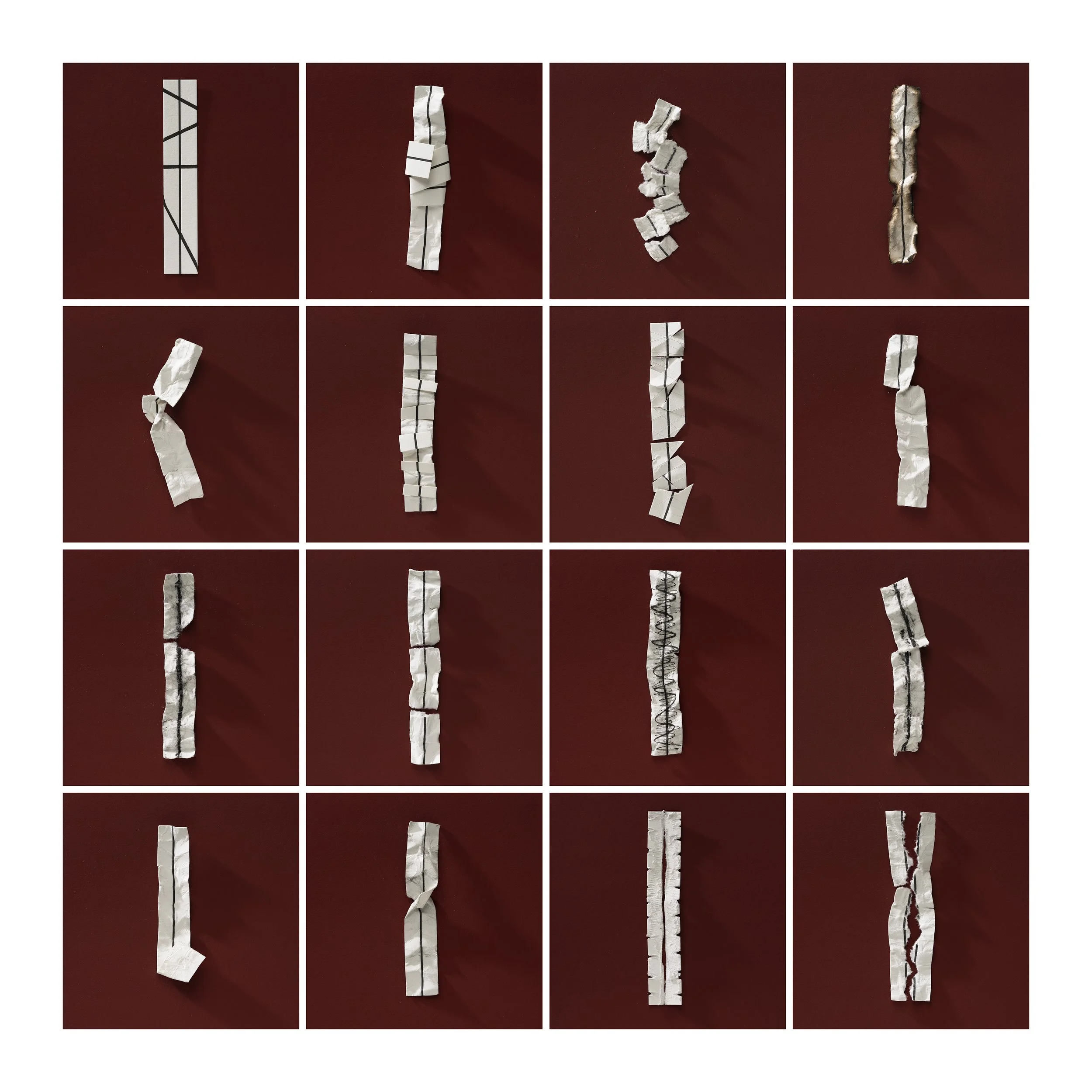
The Line Is … Truth